Buchu konggaru jjim is a quiet, old-fashioned side dish from the Korean countryside: Korean chives tossed in raw soybean flour, steamed just until they turn a deep green, and served with a small bowl of soy dressing. The flour clings to the chives and steams into a soft, nutty coating that makes a handful of greens feel like a real dish.
Home cooks in Gyeongsang Province have made vegetables this way for generations — cabbage, radish greens, and especially chives in spring, when the first cutting is tender and sweet. Because the chives are steamed rather than boiled, they keep their color and their sharp, oniony flavor instead of leaching it into the water.
It comes together in about ten minutes and asks for almost nothing: a steamer, a piece of cloth, and a spoonful of pantry seasonings. Serve it alongside rice and a soup for a plain, comforting Korean meal.
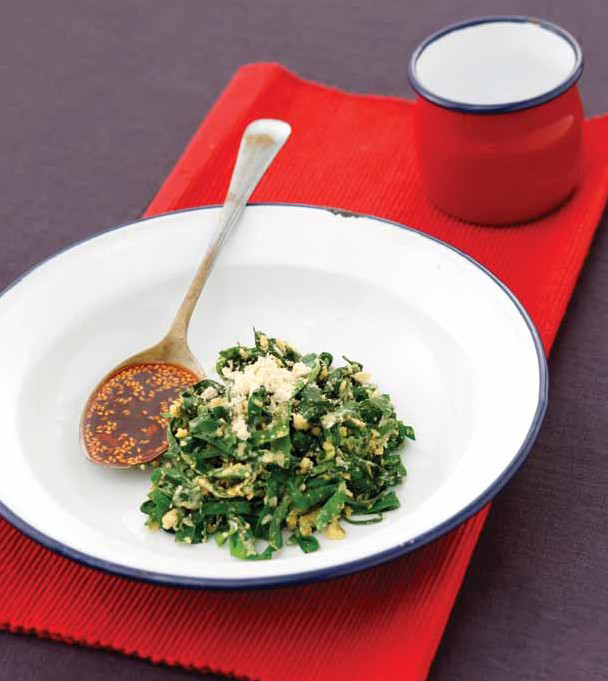
Ingredients
- 50g Korean chives (joseon buchu, about 1 loosely packed cup)
- 7g raw soybean flour (1⅓ teaspoons)
- 3g low-sodium soy sauce (2/3 teaspoon)
- 5g minced green onion (1 teaspoon)
- 2g minced garlic (1/2 clove)
- 2g Korean red pepper flakes, gochugaru (1/3 teaspoon)
- 2g cooking syrup (1/3 teaspoon)
- 2g sesame oil (1/3 teaspoon)
- A pinch of sesame seeds
Instructions
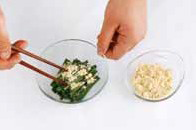
- Wash the chives thoroughly and shake off the water, cut them into 5cm (about 2-inch) lengths, then add the raw soybean flour to the chives and toss until evenly coated.
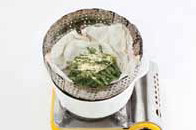
- Line a steamer with a cloth, add the chives, and steam over rising steam until they are cooked to a bright green.
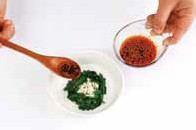
- Mix the low-sodium soy sauce with the minced green onion, minced garlic, red pepper flakes, cooking syrup, sesame oil, and sesame seeds to make the seasoning sauce, and transfer the steamed chives to a serving dish.
Tips & Variations
Finding the ingredients. Korean chives (buchu) are flat and grassy, not hollow like Western chives — look for them at H Mart or any Asian grocer, often labeled “garlic chives.” Regular garlic chives from a Chinese market work perfectly. Raw soybean flour (nal konggaru) is sold in bags in the flour aisle of Korean markets; it is uncooked, unlike roasted soybean powder (kongguru for tteok), and that raw quality is what lets it steam into a soft coating. If you cannot find it, fine soy flour from a health-food store is the closest match.
- Dry the chives well, but not bone dry. A little cling of water helps the flour stick. If they are dripping wet, the flour turns to paste.
- Don’t over-steam. Two to three minutes over strong steam is usually enough. The chives should turn vivid green; once they go olive-colored, they have gone too far and will be limp.
- The cloth matters. A cotton cheesecloth or thin kitchen towel keeps the flour from falling through the steamer holes. Parchment punched with holes works in a pinch.
- Substitutions: use honey, rice syrup, or a small pinch of sugar in place of cooking syrup, and regular soy sauce if you are not watching sodium — just start with slightly less.
- Serving: spoon the sauce over the chives at the table, or serve it on the side so the greens stay loose rather than soggy. Best eaten warm the day it is made.
Nutrition
- Calories: 215 kcal
- Carbohydrates: 20 g
- Protein: 14 g
- Fat: 9 g
- Sodium: 240 mg