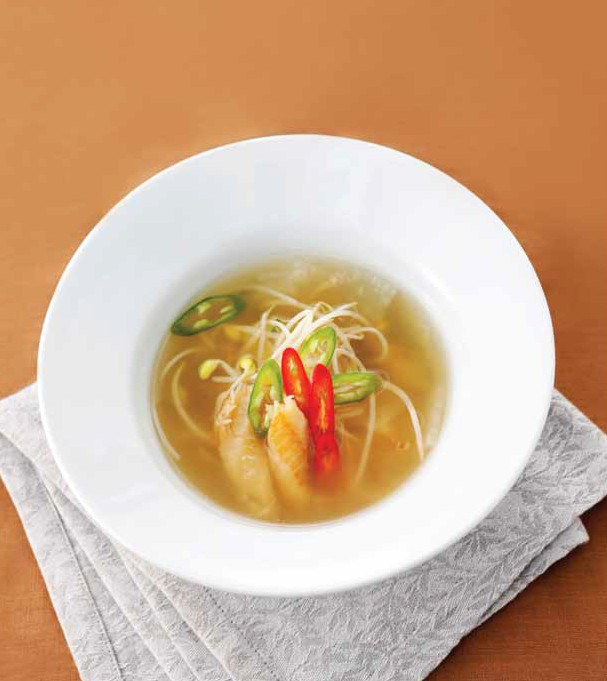
Hwangtae haejangguk is the soup Koreans reach for the morning after a long night out. Hwangtae is pollack that has been frozen and thawed over and over through a mountain winter until it turns pale gold and fluffy, and it gives a clean, savory broth without any heaviness. Add soybean sprouts, radish, and a spoonful of doenjang, and you have a bowl that tastes restorative rather than rich.
This version comes from a Korean government nutrition database, so it is built around low-sodium doenjang — just 10g for the whole pot. The dried pollack and radish carry most of the flavor, which is exactly how a good haejangguk should work. One green chili keeps it lively.
It is also fast. There is no long simmer and no stock to make in advance, because the hwangtae is the stock. From dry pantry ingredients to a hot bowl is well under half an hour.
Ingredients
- 15g shredded hwangtae, dried pollack (about 1/2 oz, 10 pieces)
- 30g soybean sprouts (about 1 oz, 1/6 of a bag)
- 30g Korean radish (about 1 oz, a 5×3×2cm / 2×1×3/4-inch piece)
- 10g low-sodium doenjang, Korean soybean paste (2 teaspoons)
- 300ml water (1 1/2 cups)
- 5g Cheongyang chili pepper (about 1/2 pepper)
- 2g minced garlic (1/3 teaspoon)
Instructions
- Trim the hwangtae, rinse it in water and lift it out to drain; trim and wash the soybean sprouts, and cut the Cheongyang chili on the diagonal.
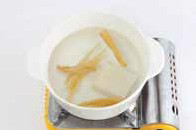
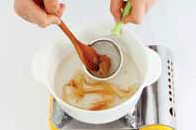
- Pour the water into a pot, add the hwangtae and the radish and bring to a boil, then lift the solids out of the stock and stir in the low-sodium doenjang until dissolved.
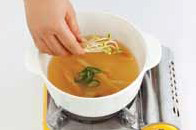
- Add the soybean sprouts, minced garlic, and Cheongyang chili, cover with the lid, and boil until steaming.
Tips & Variations
- Where to find hwangtae: Korean grocers sell it pre-shredded in bags labeled “hwangtae chae” or “dried pollack strips.” Any Asian market with a Korean section usually carries it; it keeps for months in the freezer.
- Rinse, don’t soak: A quick rinse softens the pollack and washes off dust. Long soaking pulls the flavor out into the water instead of your broth.
- About step 2: The original instruction reads literally as removing items from the stock before adding the doenjang — in practice most cooks fish out the radish piece (or leave everything in, which is also fine and gives a heartier bowl). Either way, dissolve the doenjang in the hot broth rather than dropping it in as a lump.
- Substitutions: If you cannot find low-sodium doenjang, use regular doenjang but start with 1 teaspoon and taste. Daikon works in place of Korean radish. Serrano or jalapeño can stand in for the Cheongyang chili, though they are milder.
- Soybean sprouts: Keep the lid on once they go in. Lifting the lid partway through cooking is the classic cause of a raw, beany smell.
- Serve piping hot with rice and kimchi. A little salt or a splash of fish sauce at the table lets each person adjust without salting the whole pot.
Nutrition
- Calories: 100 kcal
- Carbohydrates: 12 g
- Protein: 13 g
- Fat: 0 g
- Sodium: 361 mg