Budae jjigae, literally “army base stew,” was born out of necessity after the Korean War, when American military rations like spam and sausages were mixed with Korean ingredients to stretch scarce food supplies. Most versions today are spicy and red, built on a gochujang-based broth loaded with instant noodles and processed meats. This “malgeun,” or clear, version takes a different path — a light, savory dashima (kelp) broth that lets the fresh vegetables, meatballs, and glass noodles shine without the heavy spice.
This lighter take is a great weeknight or cold-weather meal when you want something warm and comforting but not overwhelming. It’s often served family-style, simmered right at the table on a portable burner, with everyone helping themselves as it cooks. Because the broth is so clean, it’s also a good option if you’re cooking for guests who don’t love spicy food but still want that classic Korean stew experience.
What makes this dish special is the contrast of textures — chewy jorangi rice cakes, springy glass noodles, tender meatballs, and crisp vegetables all coming together in one pot. It’s a satisfying, well-rounded meal that comes together with simple, honest cooking techniques.
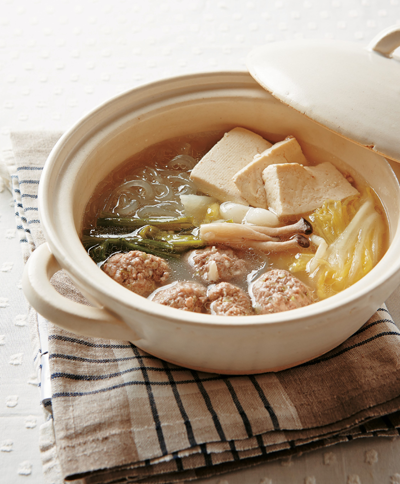
Ingredients
- Oyster mushrooms (10g, about 1/4 cup)
- Tofu (50g, about 1/3 block)
- Bean sprouts (10g, a small handful)
- Napa cabbage (40g, about 1/3 cup chopped)
- Water dropwort (minari) (20g, a small handful)
- Pork (50g)
- Beef (50g)
- Soaked glass noodles (10g, about 2 tablespoons)
- Jorangi rice cakes (30g, small twisted rice cakes)
- Dried kelp (dashima) for stock (3g, 1 small piece)
- Onion (30g, about 1/4 small onion)
- Green onion (20g, about 1 stalk)
- Korean radish (30g, a small chunk)
- Dried red chili pepper (5g, 1-2 whole peppers)
- Meatball seasoning – Ginger juice (2g, about 1/2 teaspoon)
- Meatball seasoning – Minced green onion (10g, about 2 teaspoons)
- Meatball seasoning – Minced garlic (5g, about 1 teaspoon)
- Meatball seasoning – Ground black pepper (0.1g, a pinch)
- Meatball seasoning – Salt (0.1g, a pinch)
Instructions
- Add the dashima stock ingredients to water and bring to a boil to make the broth.
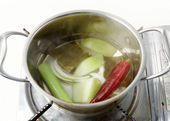
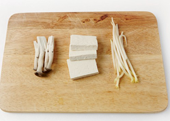
- Tear the oyster mushrooms into strips, slice the tofu, and trim the heads and tails off the bean sprouts to clean them.
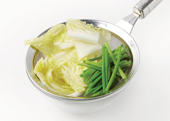
- Blanch the napa cabbage and water dropwort (minari) briefly.
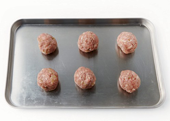
- Mix the pork and beef with the meatball seasoning, knead well, and shape into small meatballs.
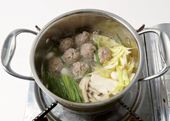
- Arrange all the ingredients around the pot, pour in the broth, and bring everything to a boil.
Tips & Variations
Here are a few notes to help this recipe come together smoothly outside Korea:
- Jorangi rice cakes: these small, twisted rice cakes can be found at Korean grocery stores or online. If unavailable, regular sliced rice cakes (tteok) make a fine substitute.
- Water dropwort (minari): if you can’t find minari, a small amount of watercress or simply extra green onion can stand in, though the flavor will be slightly different.
- Dashima (dried kelp): look for this in the Korean or Japanese section of an Asian grocery store; it’s the same kelp used for dashi broth. Don’t boil it too long or the stock can turn slightly bitter — remove it once the broth is flavorful.
- Meatballs: keep the meat mixture cold while shaping to help the meatballs hold together better in the simmering broth.
- Serving: this dish is traditionally cooked tableside in a shallow pot, but a regular stockpot works just as well at home.
Nutrition
- Calories: 395.9 kcal
- Carbohydrates: 8.67 g
- Protein: 6.23 g
- Fat: 2.41 g
- Sodium: 334.9 mg