Dakgogi kimchi jjigae is a hearty Korean stew that combines tangy, well-fermented kimchi with tender chicken breast in a savory anchovy-kelp broth. It’s a close cousin of the more common pork-based kimchi jjigae, but the chicken makes it a bit lighter while still delivering that deep, spicy-sour comfort food flavor Koreans crave, especially on cold or rainy days.
This is the kind of dish you’ll find simmering on the stove in Korean homes for a weeknight dinner, usually served bubbling hot straight from the pot with a bowl of steamed rice on the side. The longer the kimchi has fermented, the better the stew tastes, so this is a great way to use up kimchi that’s gotten a little too sour to eat on its own.
It comes together in one pot and doesn’t require any special technique, just a bit of patience while the broth simmers and the kimchi softens into the soup. If you’ve never cooked with Korean chicken jjigae before, this is a forgiving, flexible recipe to start with.
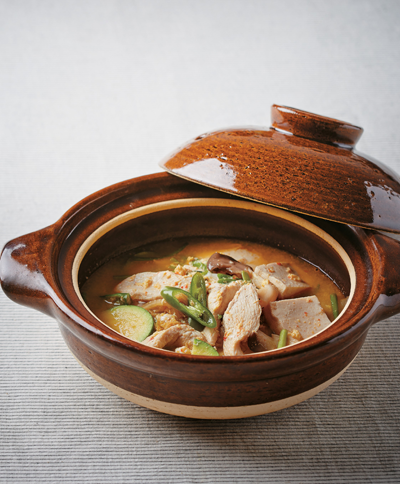
Ingredients
- Chicken breast 60g (about 1/4 cup, diced)
- Zucchini 30g (about 1/4 small zucchini)
- Water dropwort (minari) 20g (about 1/4 cup)
- Cheongyang chili pepper 3g (about 1 small pepper)
- Tofu 60g (about 1/4 block)
- Kimchi 120g (about 3/4 cup)
- Sesame oil 20g (about 1 1/2 tablespoons)
- Oyster mushrooms 10g (about 1/8 cup)
- Egg 50g (about 1 large egg)
- Dried kelp (dasima) for stock 5g (about 1 small piece)
- Radish 40g (about 1/4 cup, sliced)
- Green onion 5g (about 1 tablespoon, chopped)
- Onion 10g (about 2 tablespoons, sliced)
- Dried red chili pepper 3g (about 1 whole dried chili)
- Dried anchovies 10g (about 8-10 anchovies)
- Garlic 10g (about 2 cloves, minced)
- Cheongju (Korean rice wine) 10g (about 2 teaspoons)
- Water 300g (about 1 1/4 cups)
Instructions
- Combine the stock ingredients (dried kelp, radish, green onion, onion, dried red chili pepper, dried anchovies, garlic, cheongju, water) and bring to a boil over medium heat, then strain through a sieve to make the stock.
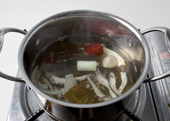
- Slice the chicken breast into thin strips, add to water, and boil until cooked through.
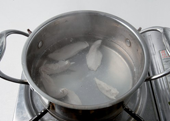
- Cut the zucchini into half-moons, cut the water dropwort into 5cm (about 2-inch) lengths, finely chop the cheongyang chili pepper and soak in cold water to remove the seeds, and cut the tofu into bite-sized pieces and soak in water.
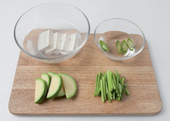
- Cut the kimchi into bite-sized pieces and stir-fry in sesame oil, then pour in the stock.
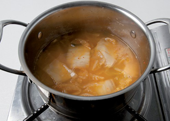
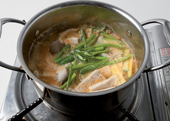
- Add the tofu, zucchini, oyster mushrooms, water dropwort, and chicken breast, and once it comes to a boil, add the beaten egg and cheongyang chili pepper, then simmer a little longer to finish.
Tips & Variations
Here are a few notes to help this recipe turn out well outside Korea:
- Kimchi matters most: use well-fermented, sour napa cabbage kimchi rather than fresh kimchi for the best depth of flavor. Older kimchi from the back of the fridge is ideal here.
- Water dropwort (minari) can be found at Korean or Asian grocery stores; if unavailable, substitute with watercress or simply omit it.
- Cheongyang chili peppers are quite spicy; substitute with jalapeño or serrano if you want a milder stew, or skip if you prefer no extra heat.
- Dried anchovies and dried kelp are common Korean stock ingredients found in the international aisle of many grocery stores or at Korean markets; you can substitute a light fish or dashi stock if needed.
- Cheongju (Korean rice wine) can be substituted with dry sake or mirin in a pinch.
- Don’t skip straining the stock in step 1, it keeps the final stew clean and free of stray anchovy bits and kelp.
Nutrition
- Calories: 277.1 kcal
- Carbohydrates: 1.79 g
- Protein: 5.87 g
- Fat: 2.73 g
- Sodium: 776.6 mg