Haemul kimchi jjigae is the seafood-lover’s version of Korea’s most beloved stew. While the classic kimchi jjigae usually leans on pork belly for richness, this version swaps in baby octopus (juggumi) for a briny, slightly chewy bite that pairs beautifully with the tangy, well-fermented kimchi and savory anchovy-kelp broth.
This is a cold-weather, rainy-day, “I need something hot and comforting” kind of dish in Korea. It’s often made at home with kimchi that’s gotten a little too sour to eat on its own — long-fermented kimchi actually makes the best jjigae, since the extra tang mellows out as it simmers. A splash of pear juice at the end rounds out the sourness with a touch of natural sweetness.
It’s a quick, one-pot meal that comes together in under 40 minutes and pairs perfectly with a bowl of steamed rice. If you have access to a Korean market for the octopus and kimchi, the rest of the ingredients are simple pantry staples.
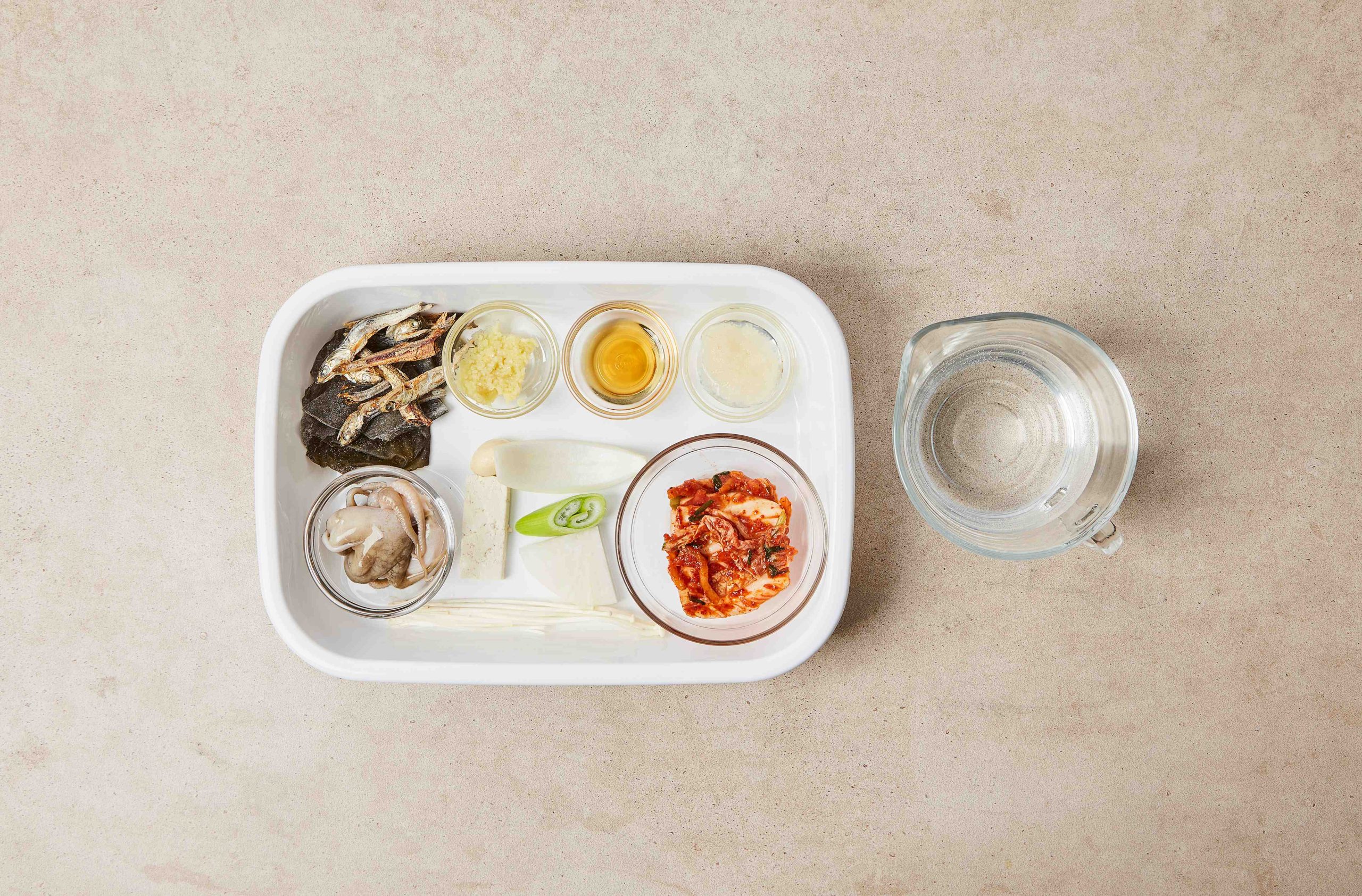
Ingredients
- Baby octopus (juggumi) 40g (about 1/4 cup, chopped)
- Kimchi 40g (about 1/3 cup)
- Radish 10g (a small slice)
- Garlic 3g (about 1 small clove)
- Green onion 3g (about 1 tsp, sliced)
- Onion 10g (about 1 tbsp, sliced)
- Tofu 10g (a small cube)
- Sesame oil 3g (about 3/4 tsp)
- Pear juice 10g (about 2 tsp)
- Enoki mushrooms 3g (a small handful)
- Dried kelp (dashima) 5g (about 1 small piece)
- Dried anchovies 10g (about 8-10 anchovies)
- Water 300g (about 1 1/4 cups)
Instructions
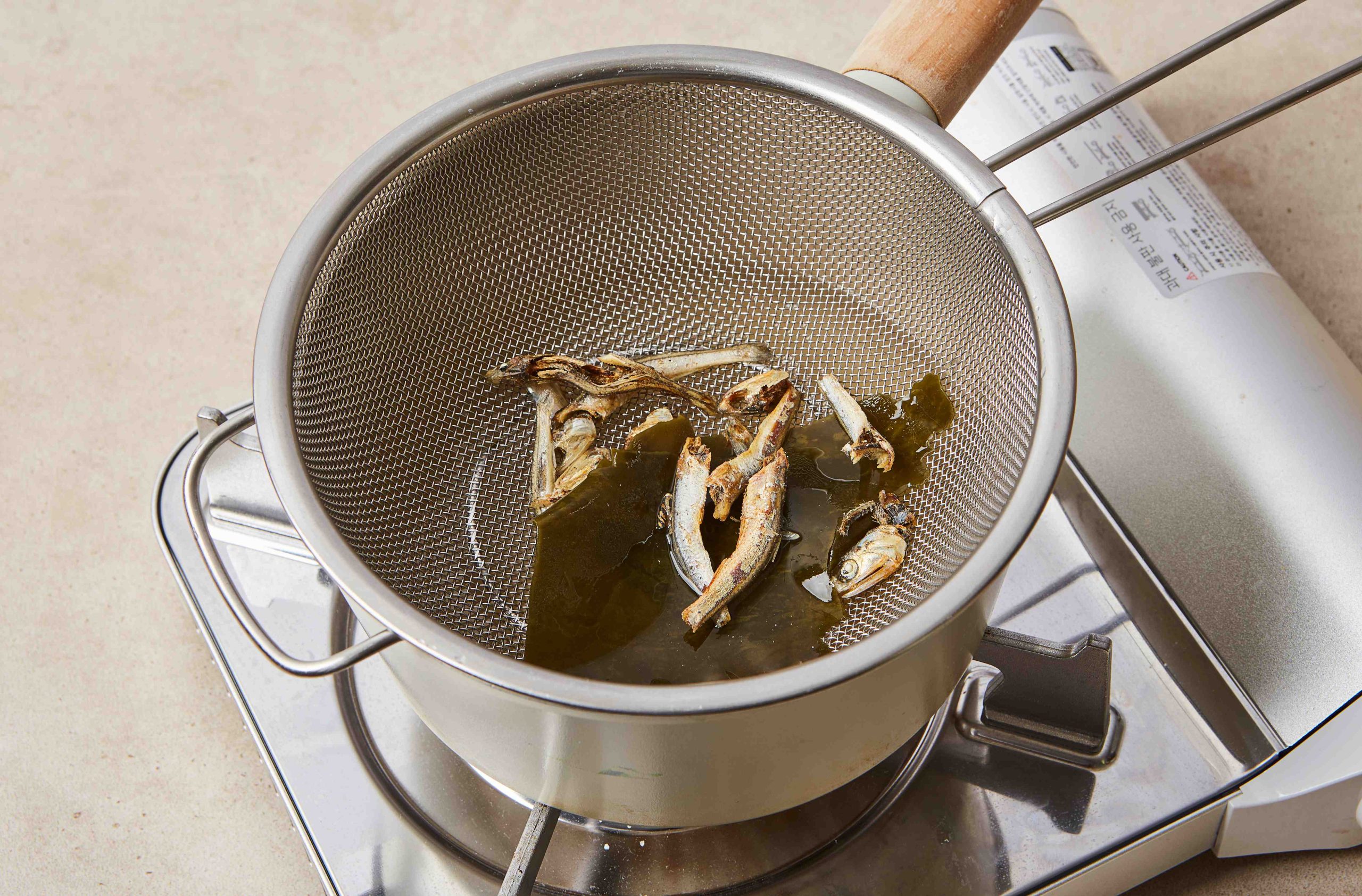
- Add the broth ingredients (dried anchovies, kelp, and water) to a pot and bring to a boil; once boiling, remove the kelp and simmer a little longer to finish the broth.
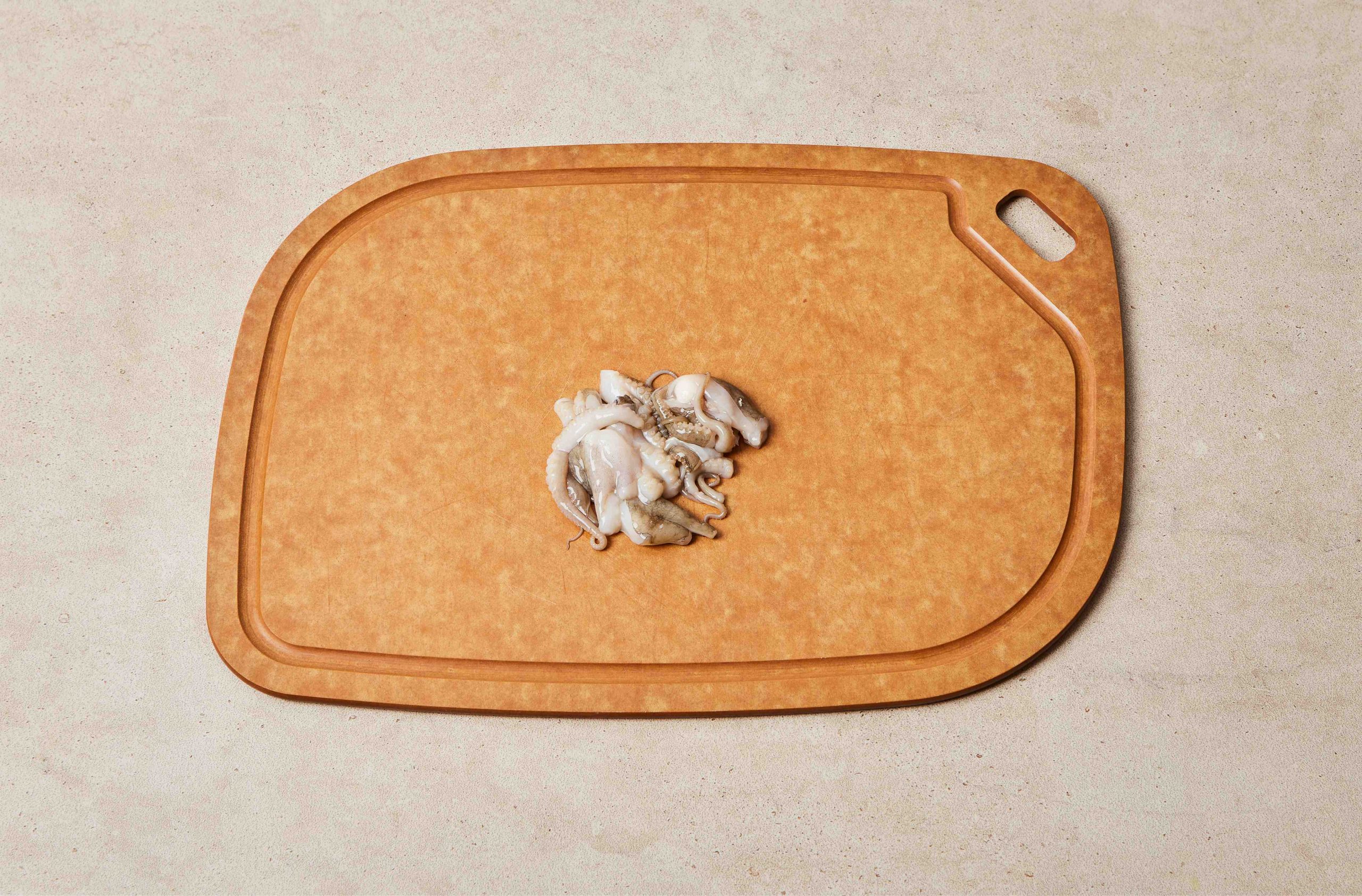
- Clean the baby octopus by removing the innards, mouth, and eyes, then cut into 4cm (about 1.5-inch) pieces.
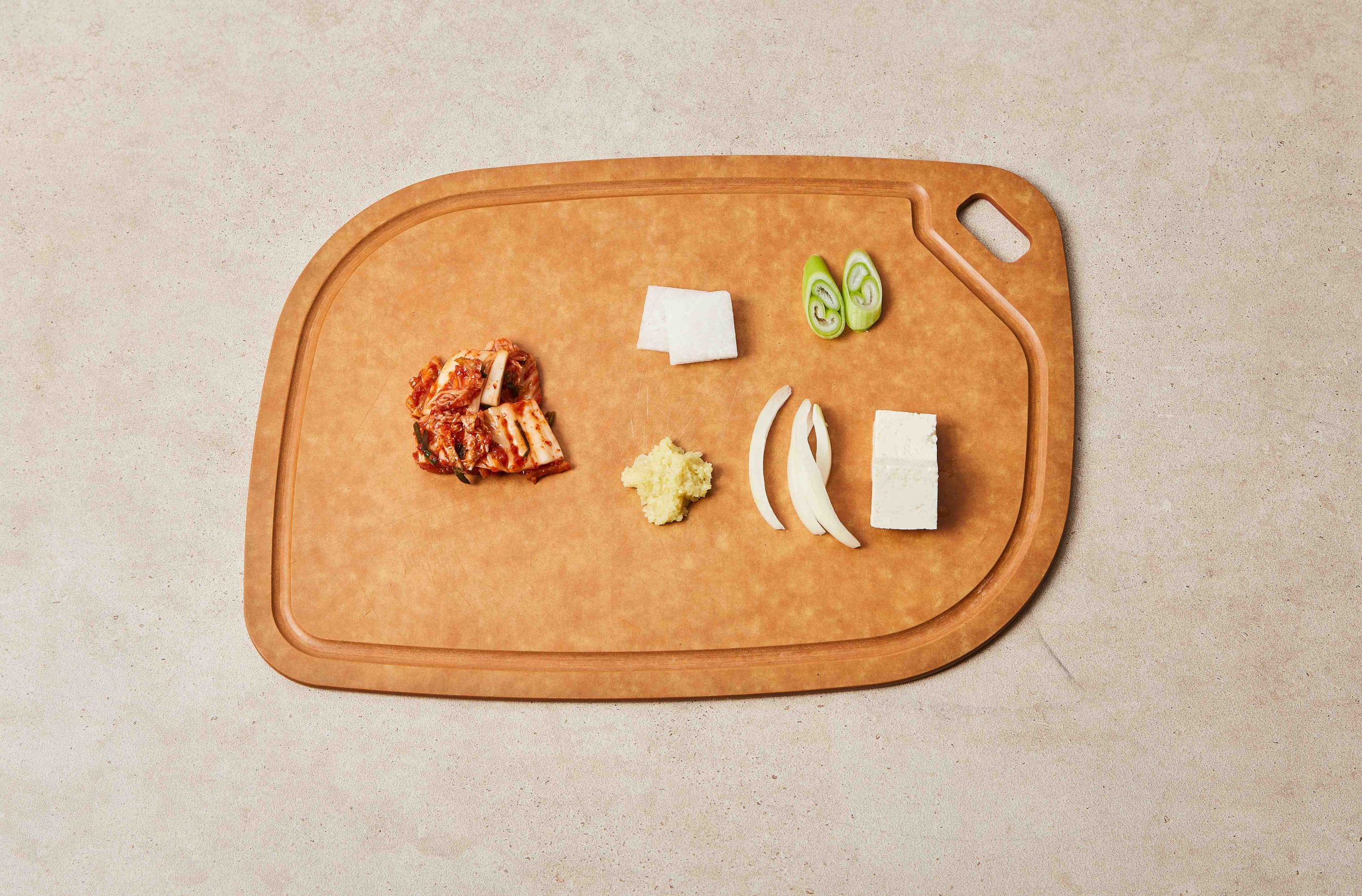
- Squeeze the kimchi juice out well and cut the kimchi into bite-sized pieces; slice the radish thinly, mince the garlic, cut the green onion on a diagonal, thickly julienne the onion, and slice the tofu into flat pieces.
- Heat sesame oil in a pot and stir-fry the kimchi, radish, and onion until the onion turns translucent, then pour in the broth; once it boils, add the baby octopus and minced garlic and simmer further.
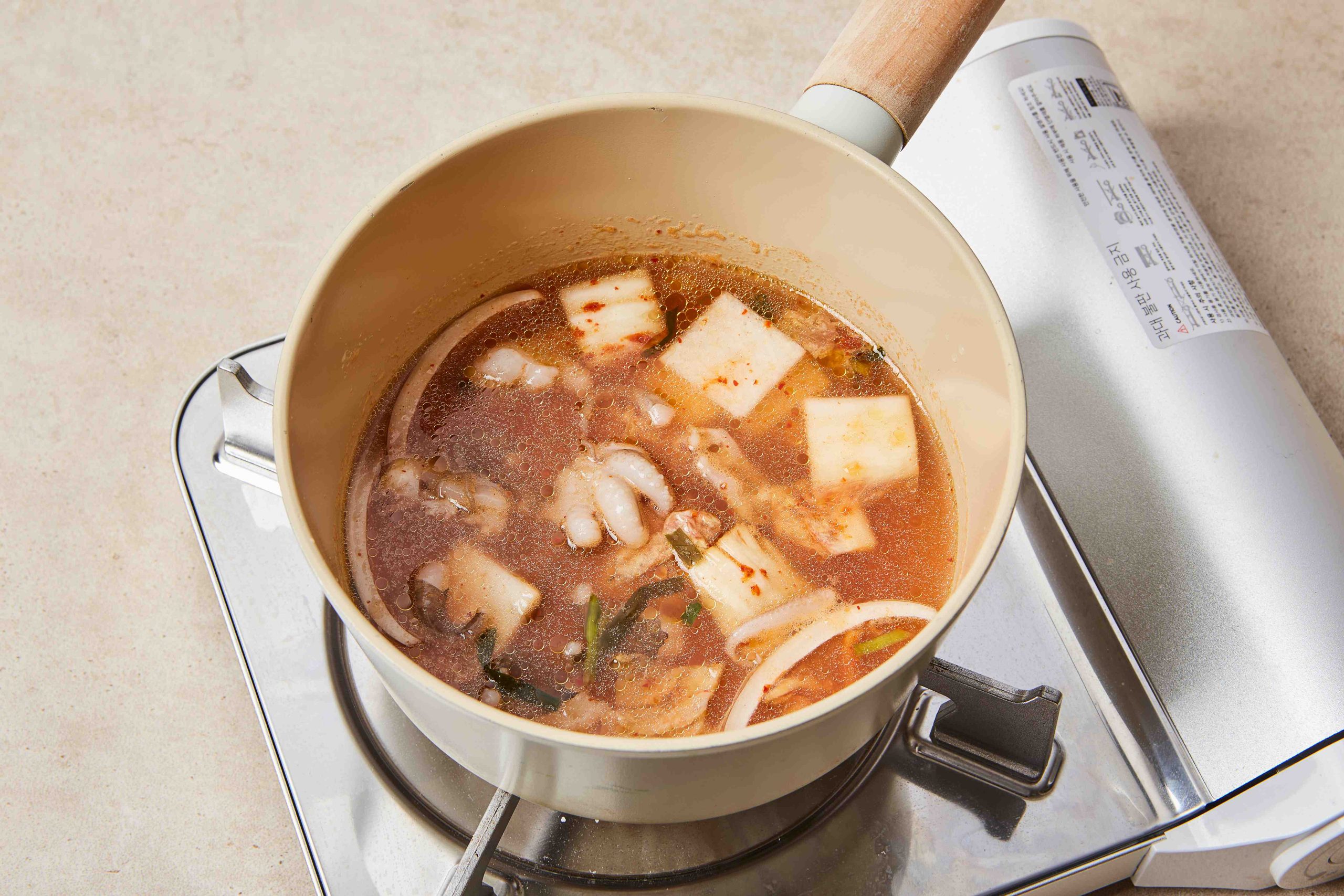
- Mix the reserved kimchi juice and pear juice in a 2:1 ratio and add it to the stew to season.
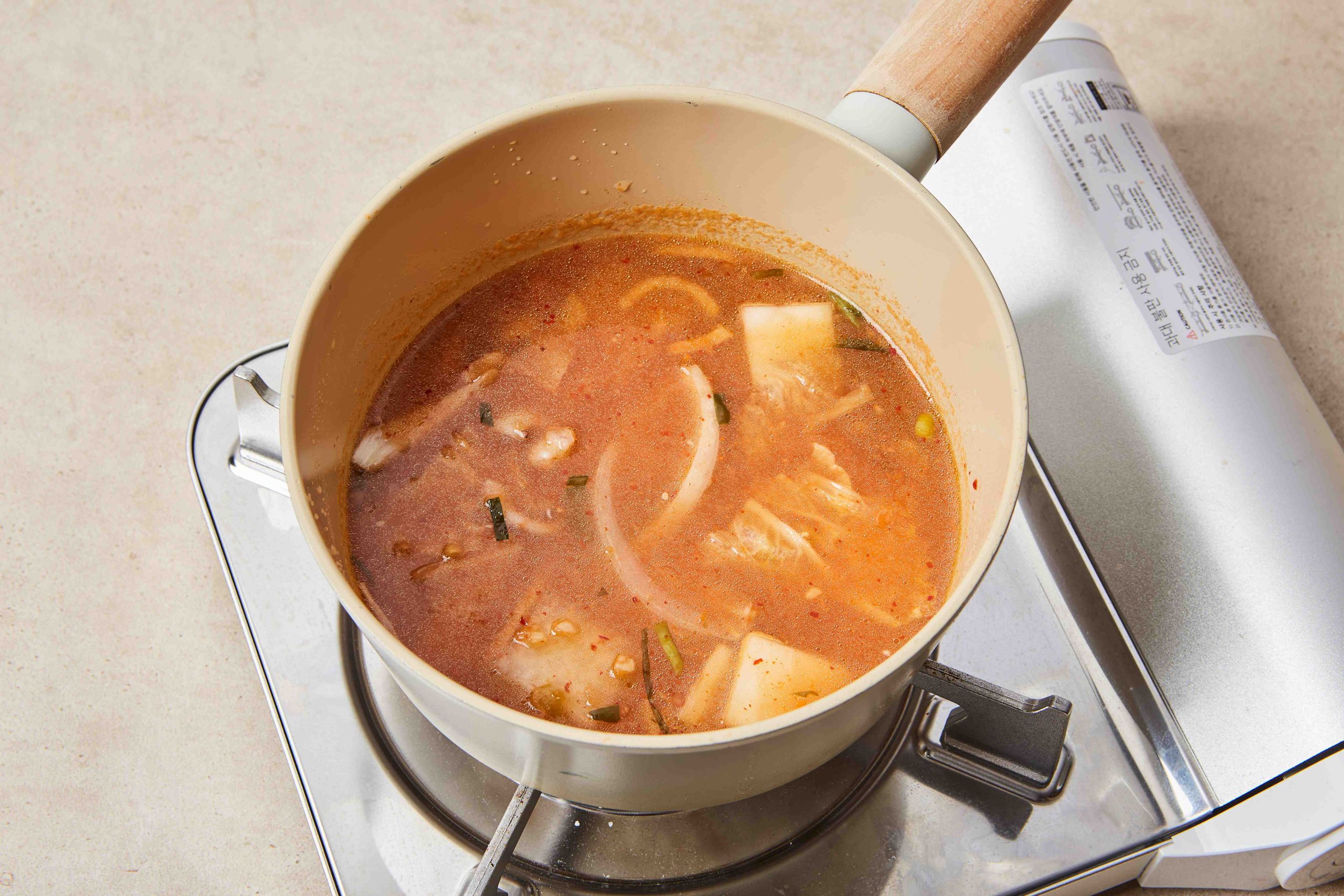
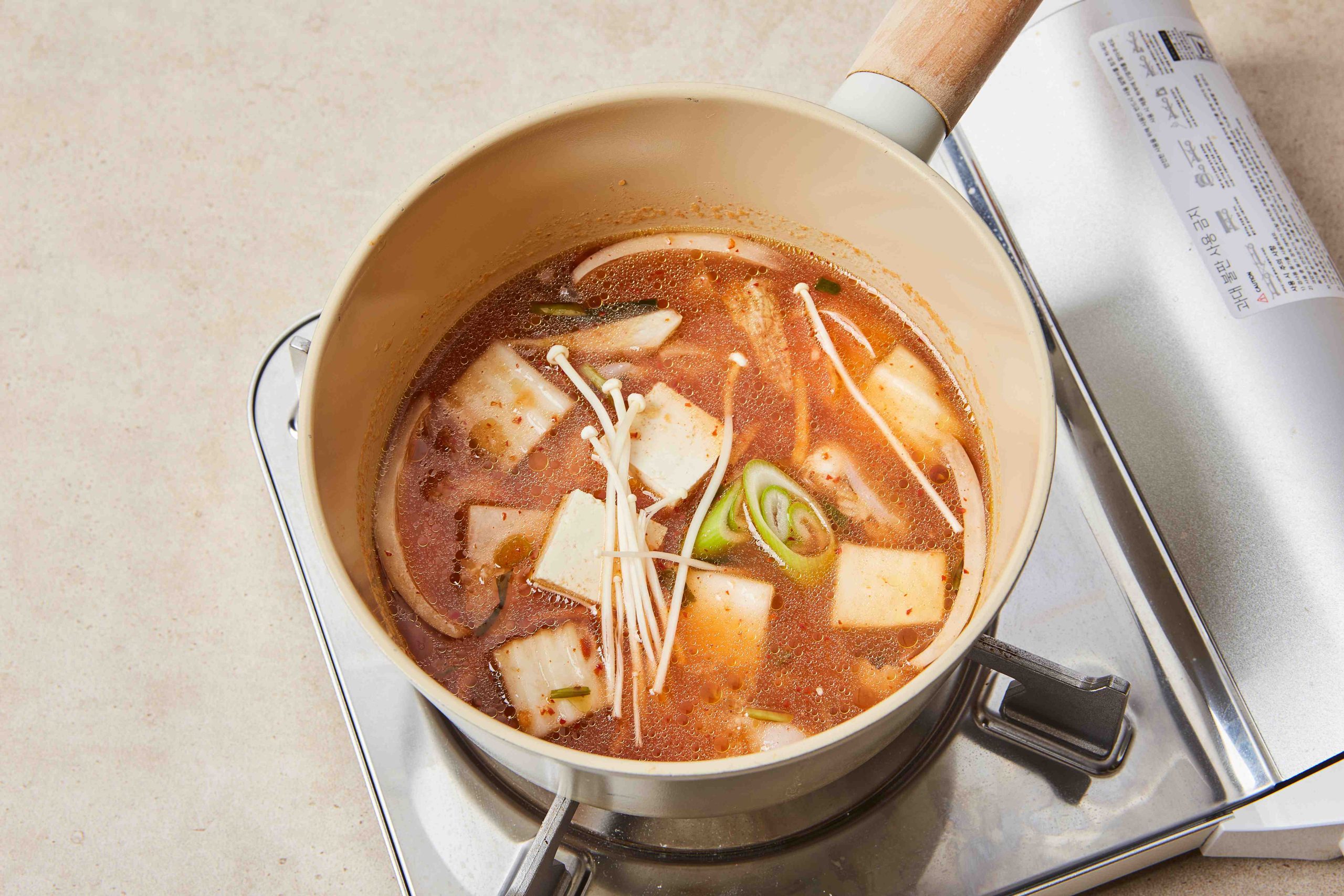
- Add the tofu and enoki mushrooms and bring to one final boil to finish.
Tips & Variations
Kimchi matters most here: use kimchi that has fermented for at least a few weeks — the sourer, the better for this dish. Fresh, mild kimchi won’t give you the same depth of flavor.
- Baby octopus substitute: if juggumi isn’t available, small squid or even shrimp work well as a substitute, though the texture will differ slightly.
- Pear juice: Korean pear (bae) juice is sold in small pouches at Korean grocery stores; if unavailable, a splash of apple juice or a pinch of sugar can mimic the mellowing sweetness.
- Dried anchovies and kelp: look for “myeolchi” and “dashima” in the dried goods aisle of any Korean or Asian market — they’re the backbone of many Korean broths.
- Common mistake: don’t skip squeezing out the kimchi juice before chopping — reserving it and mixing it with the pear juice is what gives the final seasoning its balanced sour-sweet punch.
Nutrition
- Calories: 53.9 kcal
- Carbohydrates: 5.2 g
- Protein: 3 g
- Fat: 2.3 g
- Sodium: 385.1 mg