This is a light, crisp salad built on chicory — the slightly bitter, frilly green Koreans call chikeori. It shows up on Korean tables as a banchan, a small side dish set out alongside rice, soup, and grilled or braised mains rather than served as a first course.
The dressing is about as simple as it gets: olive oil, vinegar, sugar, and minced raw garlic, whisked until it comes together. The garlic is what makes it read as Korean rather than Mediterranean, and it stands up nicely to chicory’s bitterness.
Because the quantities are small and everything is raw, this comes together in minutes. It’s a good thing to make when a meal feels heavy and needs something sharp and cold next to it.
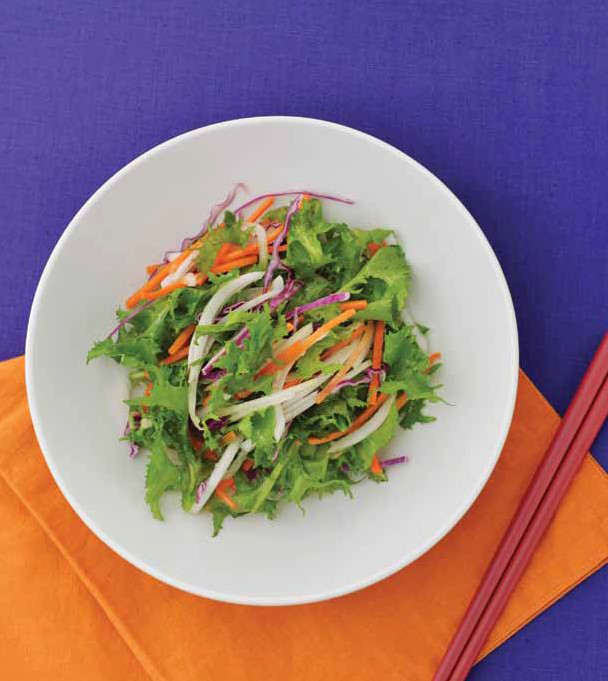
Ingredients
- 30g chicory (about 10 stems, roughly 1 oz)
- 15g red cabbage (a 5×3cm / about 2×1-inch piece)
- 10g onion (a 2×1cm / about 3/4×1/2-inch piece)
- 5g carrot (a 3×1×1cm / about 1×1/2×1/2-inch piece)
- 10g olive oil (2 teaspoons)
- 5g vinegar (1 teaspoon)
- 5g sugar (1 teaspoon)
- 5g garlic (1 clove)
Instructions
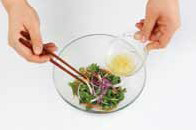
- Combine the olive oil, vinegar, sugar, and minced garlic, and whisk thoroughly with a whisk to make the olive garlic dressing.

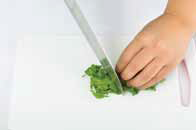
- Soak the chicory in cold water so it crisps up, drain it well, then cut it into bite-sized pieces; cut the red cabbage, onion, and carrot into fine julienne strips.
- Arrange the prepared chicory, red cabbage, onion, and carrot on a plate and pour the olive garlic dressing over the top.
Tips & Variations
Finding chicory: The green used here is the frilly, loose-leaf type sold in Korean markets as chikeori — closer to curly endive or frisée than to Belgian endive. If you can’t find it, frisée, escarole, or even young dandelion greens give you the same pleasant bitterness. Baby arugula works too, though it’s peppery rather than bitter.
- Don’t skip the cold-water soak. Ten minutes in ice water is what makes chicory snap instead of wilt. Dry it well — a salad spinner or a clean towel — or the dressing will slide right off.
- Mince the garlic very finely. One raw clove in two teaspoons of oil is assertive. Grate it on a microplane if you want it evenly distributed rather than in bites.
- Whisk the dressing properly. With this little liquid it separates fast, so whisk until slightly cloudy and dress the salad right away.
- Vinegar choice: Korean cooks typically use a mild apple or brown rice vinegar. Rice vinegar or apple cider vinegar are both good stand-ins; sharp white distilled vinegar will overpower the small amount of oil.
- Cut the vegetables thin. The red cabbage, onion, and carrot are there for color and crunch in tiny amounts, so a fine julienne matters more than usual.
This is a small-portion banchan by design. Scale it up freely, but taste as you go — the garlic doesn’t need to double when everything else does.
Nutrition
- Calories: 170 kcal
- Carbohydrates: 13 g
- Protein: 3 g
- Fat: 12 g
- Sodium: 74 mg